Sharks in Australia: What Every Beachgoer Should Know Before Getting in the Water
Every Australian has heard the same question from an overseas friend:
"Do you really swim with sharks?"
It usually comes with a raised eyebrow - and the assumption that Australians spend every beach day scanning the horizon in fear.
The truth is far less dramatic, and honestly, far more interestihng.
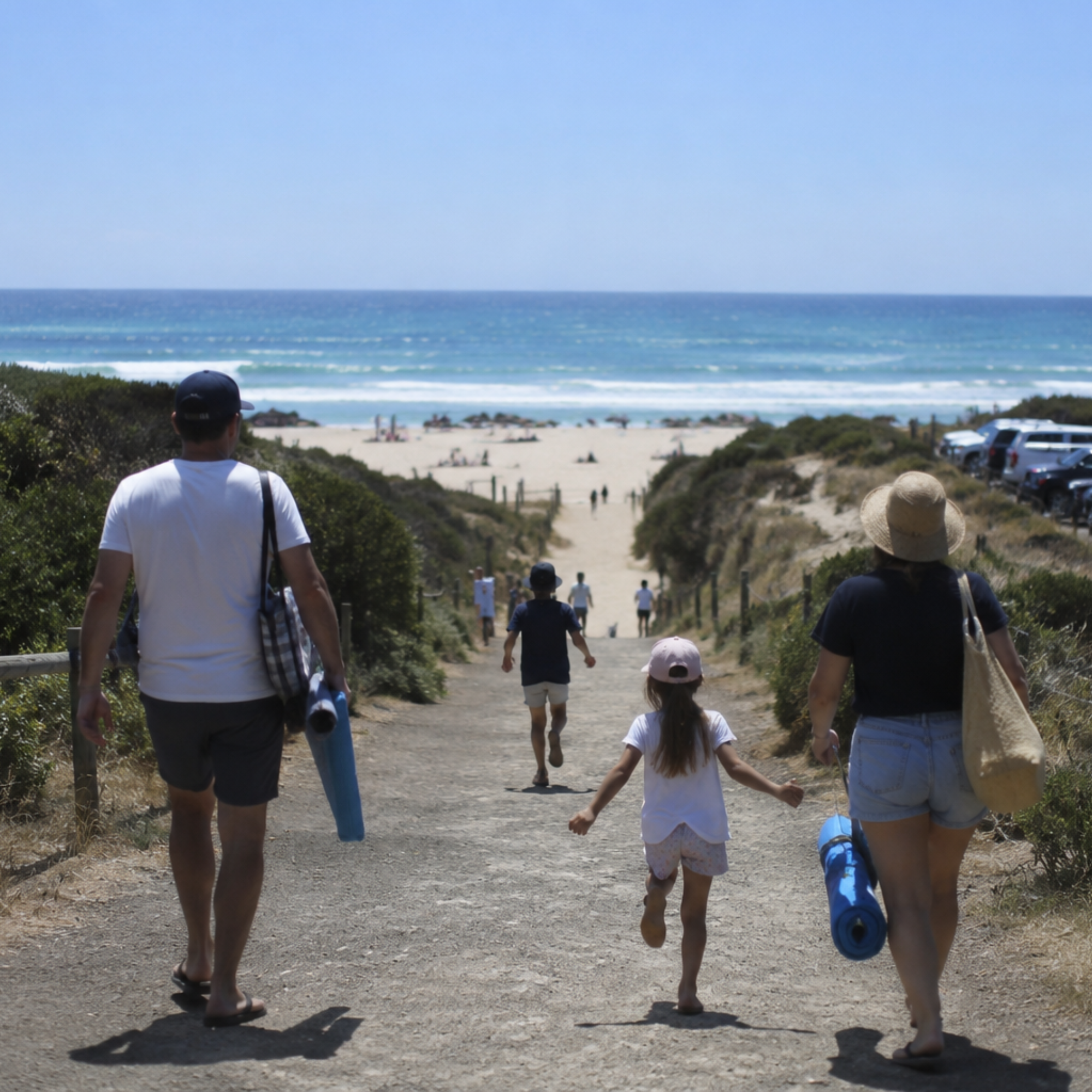
Australia is home to some of the most spectacular beaches on Earth - from the white sands of Whitehaven Beach to the turquoise waters of Ningaloo Reef. Millions of people swim, surf, and dive here every year. And yes, sharks live in these waters too. But the real story isn't fear - it's how a country built one of the world's most relaxed, most confident beach cultures around living safely alongside them.

[Image: Whitehaven Beach, Queensland - aerial view of white sand and turquoise water]
🌤 Fun fact: most Australians spend far more time checking the UV index than thinking about sharks. Sunscreen, not sharks, is the daily threat that actually gets people talking.
Why Does Australia Have So Many Sharks?
Australia's coastline stretches more than 35,000 kilometres - one of the longest in the world. Along the way it passes through warm tropical waters in Queensland, cool temperate seas in Tasmania, coral reefs, deep ocean trenches, and some of the richest marine ecosystems on the planet. It's no surprise this variety supports hundreds of shark species.
It helps to remember: sharks aren't visitors to the ocean. We are. They play a genuinely important role, keeping marine food chains balanced by regulating prey populations up and down the ecosystem.
🦈 Did you know? Australia is home to over 180 known shark species - yet only a small handful are considered potentially dangerous to humans.
So, Should You Actually Be Worried?
Probably less than you think.
Shark encounters make international headlines, which can make them feel more common than they really are. In reality, incidents are rare compared to the sheer number of people enjoying Australian beaches on any given day - swimmers, surfers, divers, and anglers, all year round. That's exactly why beach safety in Australia leans on education rather than fear: a few consistent habits reduce risk dramatically.
🌊 Did you know? Most Australians go their entire lives enjoying the beach without ever spotting a shark in the wild.
Australians don't stay out of the ocean. They've simply learned how to enjoy it wisely - the same way they've learned to check the surf report, the wind, and yes, the UV index, before they check anything else.
🇦🇺 The Aussie Tip
If you arrive at a beach and notice locals setting up between the flags, there's usually a good reason. Australians trust their lifeguards. So if you're ever unsure exactly where to swim - just follow the locals.
Sharks Are Part of Australia's Story
Long before shark alert apps and drone patrols, First Nations Australians held deep knowledge and respect for the ocean and its creatures, including sharks, which feature prominently in coastal Dreaming stories and are treated as a meaningful part of sea Country rather than simply a danger to avoid.
That relationship - respect over fear - carried through into modern Australian life. Surf Life Saving Australia, founded in the early 1900s, turned beach safety into a national institution and a rite of passage: generations of Australians have grown up as nippers, learning to read rips, waves, and conditions before they learned much else about the coast.
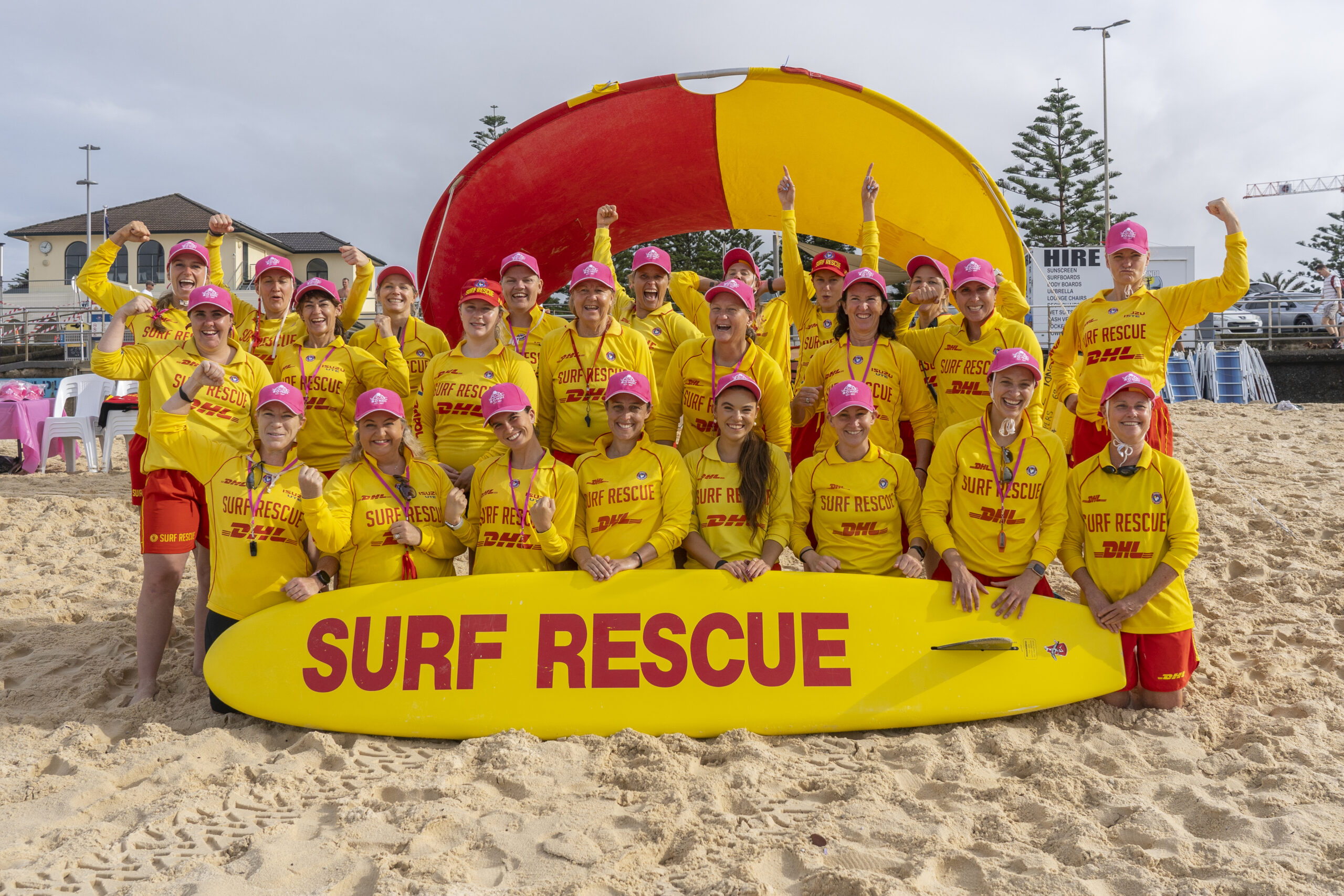 [Image: Surf Life Saving patrol group on an Australian beach]
It's part of why Australians talk about the ocean the way they do - not as something to conquer or fear, but as something to understand.
The 10 Golden Rules Every Beachgoer Should Know
-
Swim between the red and yellow flags. This is rule number one for a reason. Patrolled Australian beaches are watched by trained lifeguards who monitor conditions all day. If a shark is spotted, they can alert swimmers, sound alarms, or close the beach immediately.
[Image: Red and yellow patrol flags planted in the sand]
2. Avoid dawn, dusk, and night swims. Many shark species are most active in low light, and it's harder for everyone - you included - to see clearly at these times. Wait for full daylight before heading in.
3. Never swim alone. A buddy means help is close by if something goes wrong - a rip current, a cramp, sudden exhaustion. Surf lifesavers consistently recommend swimming with others.
4. Steer clear of fishing activity. Bait, berley, and fish scraps attract sharks. Avoid swimming near fishing platforms, boats, or anyone cleaning a catch on shore.
5. Stay out of murky water. Clear water lets you (and marine life) see what's around. Visibility drops sharply after heavy rain or near river mouths - exactly when extra caution is worth the effort.
6. Don't swim with open cuts or wounds. A shark's sense of smell is remarkably sharp, and even trace amounts of blood can draw curiosity. Let cuts heal before your next swim.
7. Follow lifeguard instructions immediately. If lifeguards clear the water, get out - no debate. They're trained professionals watching conditions in real time, and a beach closure always has a reason behind it.
 [Image: Lifeguard tower overlooking a crowded patrolled beach]
8. Read the wildlife. Diving birds, schools of fish, or seals gathering offshore can all signal feeding activity nearby. If you notice unusual behaviour, consider another spot or wait it out.
9. Check shark alerts before you go. Several states run real-time shark safety monitoring - Western Australia's SharkSmart WA app and New South Wales's SharkSmart NSW both provide beach alerts, drone surveillance updates, and shark detections.
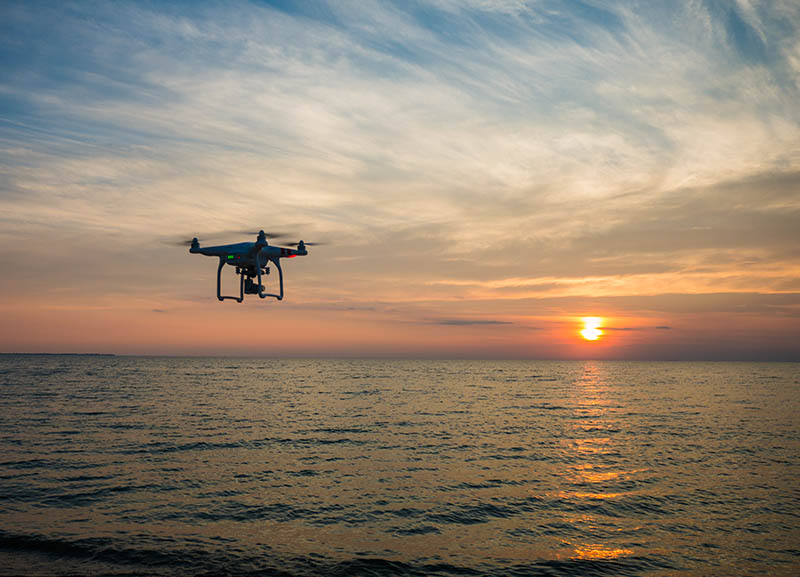 [Image: Drone hovering above shallow water near a beach]
10. Respect the ocean. Perhaps the most important rule of all. It's not about fear - it's about understanding tides, waves, weather, and marine life well enough to make good calls on any given day.
Before You Swim: The Quick Version
☀️ Check UV ↓ 📱 Check shark alerts ↓ 🚩 Find the flags ↓ 👨👩👧 Swim with friends ↓ 🌊 Enjoy the ocean
If you only remember one thing from this whole guide, remember this sequence.
Shark Safety Is About More Than Sharks
Here's something worth knowing: the same golden rules that keep you shark-safe also protect you from the things that actually cause most beach incidents in Australia - rip currents, jellyfish, and big surf. Swimming between the flags, staying with a buddy, and listening to lifeguards address all of these at once. Shark safety and general ocean safety aren't really two separate topics - they're the same set of good habits, worn two ways.
Shark Safety by State
Australian beach safety isn't one-size-fits-all - each state runs its own tools and patrol networks. A quick reference before you travel:
|
State |
Official Shark App |
Surf Life Saving Presence |
Patrolled Beaches |
|
NSW |
SharkSmart NSW |
Surf Life Saving NSW |
Extensive, especially Sydney and the coast |
|
WA |
SharkSmart WA |
Surf Life Saving WA |
Strong coverage around Perth and the south-west |
|
QLD |
Shark Control Program updates |
Surf Life Saving Queensland |
Widespread along the Gold Coast and Sunshine Coast |
|
SA |
SA shark sighting alerts |
Surf Life Saving SA |
Concentrated around Adelaide's metro beaches |
|
VIC |
Life Saving Victoria alerts |
Life Saving Victoria |
Strong coverage around Melbourne's bayside and surf coast |
|
TAS |
Local council alerts |
Surf Life Saving Tasmania |
Smaller network, concentrated in popular swimming spots |
Always check the current app or council page for your specific destination - conditions and patrol hours change with the season.
What Happens If a Shark Is Spotted?
This is one of the questions visitors ask most - and the answer says a lot about how seriously Australia takes beach safety.
- Detection: a lifeguard, drone operator, helicopter patrol, or acoustic monitoring buoy picks up a sighting.
- Siren: many patrolled beaches sound a distinct shark alarm, separate from the general "return to shore" signal.
- Evacuation: lifeguards clear the water calmly and quickly, using loudspeakers, flags, and jet skis where needed.
- Beach closure: the beach stays closed while the area is monitored.
- Ongoing patrols: drones or boats continue watching the area.
- Reopening: once it's clear the shark has moved on and conditions are safe, lifeguards reopen the beach.
The whole system is designed around one idea: catch it early, act calmly, and let people get back to their day as soon as it's genuinely safe.
Shark Myths vs. Facts
|
❌ Myth |
✅ Fact |
|
Every shark is dangerous |
Australia has hundreds of shark species, and only a small handful have ever been involved in serious incidents with people |
|
Sharks only live in deep water |
Sharks can occasionally move into shallow water, which is exactly why beach safety advice applies no matter how close to shore you are |
|
Dolphins nearby mean no sharks |
Dolphins and sharks often share the same waters, drawn by the same food sources |
|
Australian beaches are dangerous |
Thanks to lifeguards, patrols, warning systems, drones, and public education, Australian beaches are among the best-managed in the world |
How Australia Keeps Beachgoers Safe
🚁 Did you know? Some Australian beaches now use drones to help lifeguards spot sharks from the air, often catching movement long before it's visible from the sand.
Depending on the state, beach safety in Australia can involve:
- Professional lifeguards and volunteer surf lifesavers
- Helicopter patrols
- Drone surveillance
- Shark warning towers and beach signage
- Acoustic shark detection systems
- Real-time shark alert apps
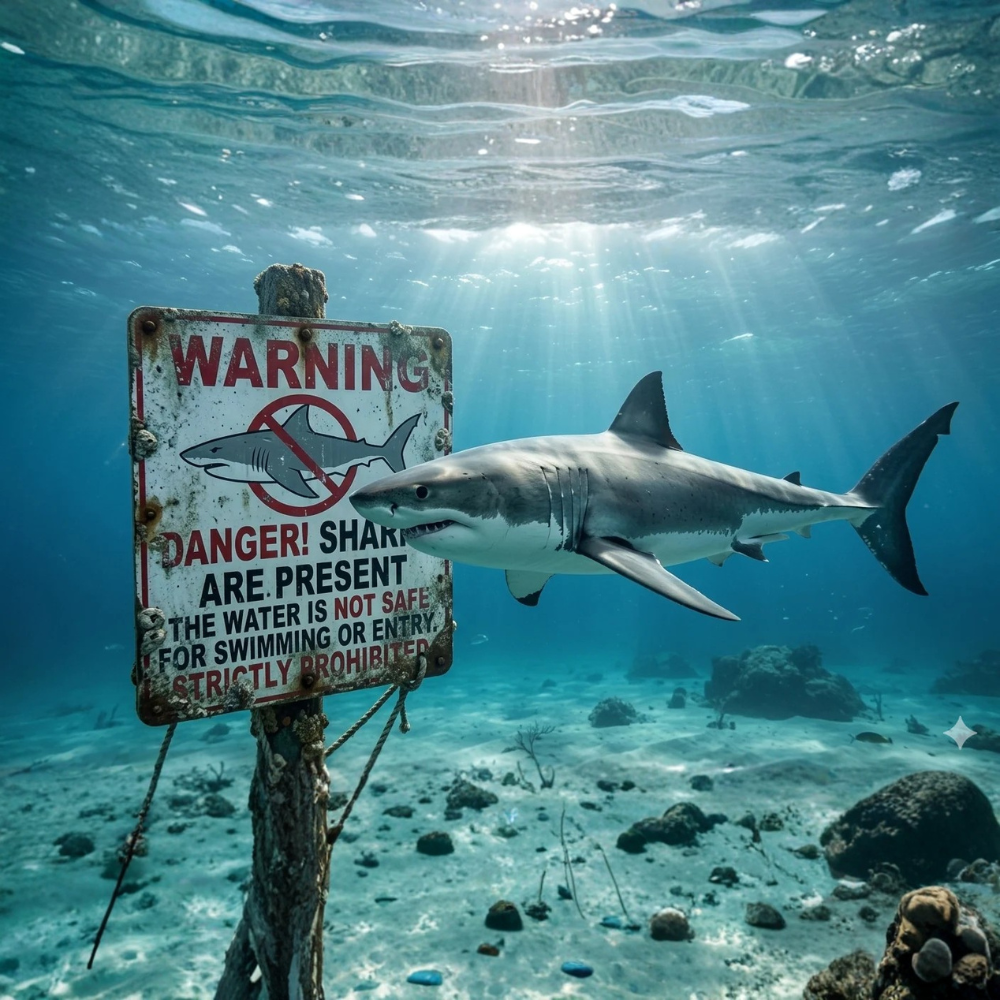
[Image: Shark warning sign posted near beach entrance]
Together, these systems give beachgoers the information they need to make smart, informed decisions before stepping into the water.
A Lesson Every Australian Learns Early
Ask any Australian child for the first rule of the beach, and you'll almost always get the same answer:
"Swim between the flags."
It's one of the earliest lessons taught by parents, schools, and surf lifesaving clubs - and those two red and yellow flags represent decades of hard-won beach safety experience.
What Australians Actually Worry About
People overseas often picture Australians spending their beach days glancing nervously at the water. In reality, the real daily concerns are a little less dramatic:
☀ Forgetting the sunscreen 🧊 The esky running out of cold drinks 🌬 The wind flipping the umbrella 🦅 A seagull making a run at the chips 🔥 Bare feet on sand that's hotter than it looks
That's the real Australian beach experience - mildly chaotic, thoroughly enjoyable, and rarely about sharks at all.
Don't...
A few quick things to avoid, alongside everything above:
❌ Ignore a beach closure because the water "looks fine" ❌ Swim right after heavy rain, when runoff clouds the water ❌ Enter the water near people using bait or berley ❌ Assume calm, flat water automatically means safe water ❌ Rely on social media chatter instead of official shark alerts and council updates
Beach Etiquette: While You're Here
If it's your first time at an Australian beach, a little etiquette goes a long way - for you, for locals, and for the coastline itself:
✔ Swim between the flags ✔ Respect marine wildlife, sharks included ✔ Leave no rubbish behind ✔ Give surfers room in the water ✔ Listen to lifeguards without argument ✔ Protect yourself from the sun, not just the surf
Frequently Asked Questions
Are shark attacks common in Australia? No. Considering how many millions of people swim, surf, and dive along the coast each year, serious incidents are very rare - and Australia's beach safety systems are specifically designed to keep it that way.
Which Australian beaches have the highest shark activity? Activity varies by season, water temperature, and location, and changes year to year. Rather than relying on a fixed list, check real-time state apps like SharkSmart WA or SharkSmart NSW before you go.
Can sharks swim in shallow water? Occasionally, yes. It's uncommon, but it's exactly why beach safety rules apply everywhere along the shoreline, not just further out.
Should I wear shiny jewellery in the water? It's best to avoid it. Reflective jewellery can resemble the flash of fish scales, so many guides recommend leaving it on shore.
Are surfers at greater risk than swimmers? Surfers spend more time further from shore and closer to the surface, which is part of why some guidance mentions slightly elevated caution for surfing at dawn, dusk, or in murky water - the same core rules apply either way.
What should I do if I see a shark? Stay calm, alert nearby swimmers and lifeguards if possible, and move toward shore without splashing excessively. Let the professionals handle it from there.
Can sharks come close to shore? Yes, occasionally, particularly near river mouths, fishing spots, or murky water - all good reasons to follow the golden rules above.
Is swimming in Australia safe overall? Overwhelmingly, yes. Millions of locals and visitors do it safely every year, thanks to patrolled beaches, real-time monitoring, and an ocean safety culture that takes the water seriously without being ruled by fear.
Final Thoughts
Australia's beaches are some of the most incredible places on Earth. Sharks have always been part of that environment - and so has Australia's world-class beach safety culture.
Learn the conditions, respect the ocean, listen to the people who protect it, and you'll quickly understand why Australians keep spending every summer exactly where they love to be: by the water.

Written by Nathaniel Cross